In recent years, many restaurants and quick-service restaurants (QSRs) have transitioned from traditional paper menu to digital menu boards.
For those who have been quick enough to understand the importance of embracing these restaurant TV displays have seen significant changes in their profits. But there are still a lot of restaurant businesses that are yet to make the shift.
By presenting convincing data, we can help businesses in the hospitality sector make informed decisions regarding the implementation of menu boards.
So, we decided to conduct an internal survey of our 75 clients (87% of which are QSR and fast casuals). This survey led to some interesting insights that we would like to highlight with this blog.
The most important factor is the sales figures. Based on the input from our respondents, we found that they saw an average increase of 8-10% in sales after implementing digital menu boards.
Additionally, around 88% of respondents agreed that switching to TV menu boards had a positive impact on customer experience and satisfaction.
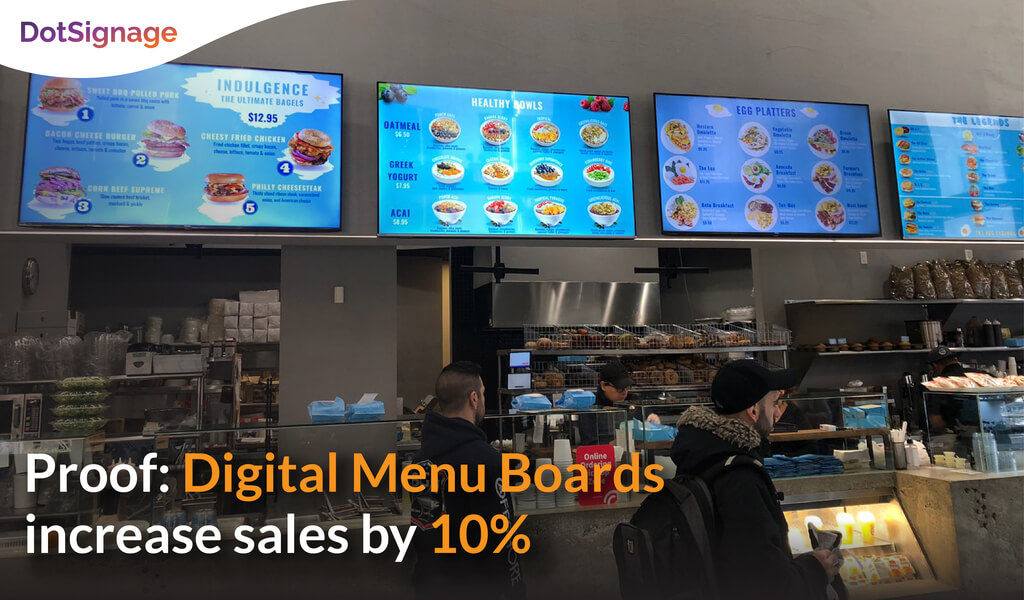
Other added benefits of having them as reported by respondents included
- Improved visibility and promotion of new or seasonal menu items
- Easier and faster menu updates
- Savings from paper printing costs that could be utilized for improving the restaurant services
- Increase in sales of high-ticket selling items
- More footfalls and inclination to try newly added menu items
Overall, the data from this survey suggests that transitioning to digital menu boards can yield significant benefits for restaurants and QSRs that are not just limited to sales or customer satisfaction.
Restaurant businesses that have yet to make the switch may want to consider doing so to remain competitive in a rapidly evolving industry.
Read about our findings and decide for yourself!
Factors considered in the survey to gauge the impact on overall sales:
- Margin per order (up by 3.2%)
- Average check size (up by 6%)
- Table turnover rate (up by 15.3%)
- Customer retention rate (up by 1.8%)
- Employee productivity (up by 20%)
- Cost of goods sold (down by 3.6%)
(The data states an average number from our survey inputs)
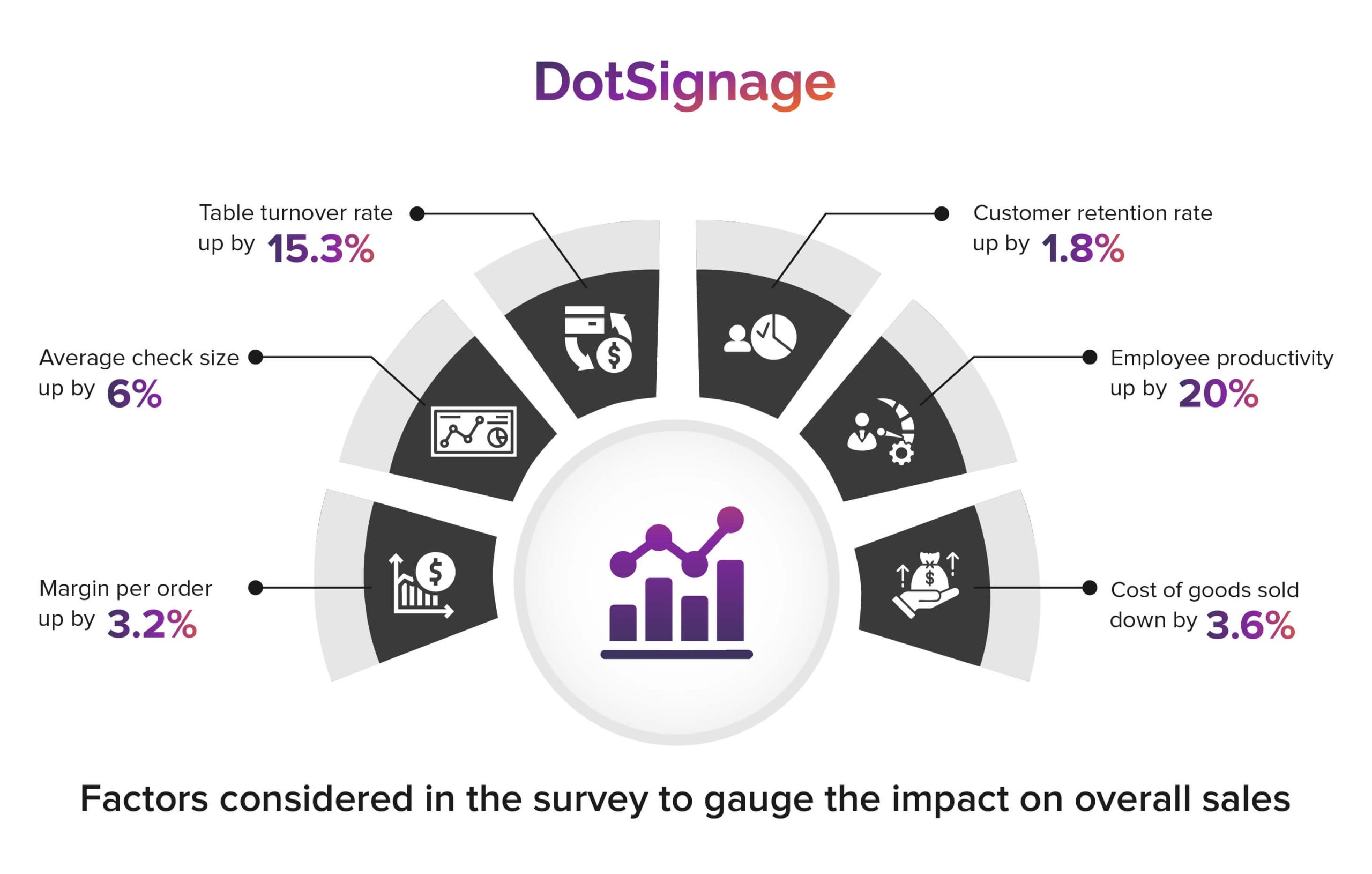
The margin per order has increased by 3.2%. This means that restaurants could continue to provide high-quality ingredients and service while maintaining profitability. Their average check size has increased by 6%, allowing customers to enjoy more of their favorite dishes.
Our digital menu board software also contributed to a 15.3% increase in table turnover rate, which means customers can enjoy your meals in a timely manner, even during busy hours. The customer retention rate increased by 1.8%, which is a testament to the restaurants’ efforts to enhance your dining experience by putting them to good use.
Employees at the restaurant also reported a 20% increase in productivity since the implementation of our digital menu screens. This means that the team there can focus on providing exceptional service to you and your fellow diners instead of spending more time explaining your menu to the customers if they have any queries.
Despite these significant improvements, the cost of goods sold did not see any increase, which means the restaurants continued to provide signature dishes at the same affordable prices.
Factors considered to measure customer experience:
- Effect on wait times or queues (reduction by 20%)
- Average time taken to place an order from digital menu boards (down by 23%)
- Impact of promotions on the orders (3.8% up in orders of items promoted)
- Accuracy of orders (8% reduction in order errors)
- Impulsive and upsell purchases (up by 12%)
(The data states an average number from our survey inputs)
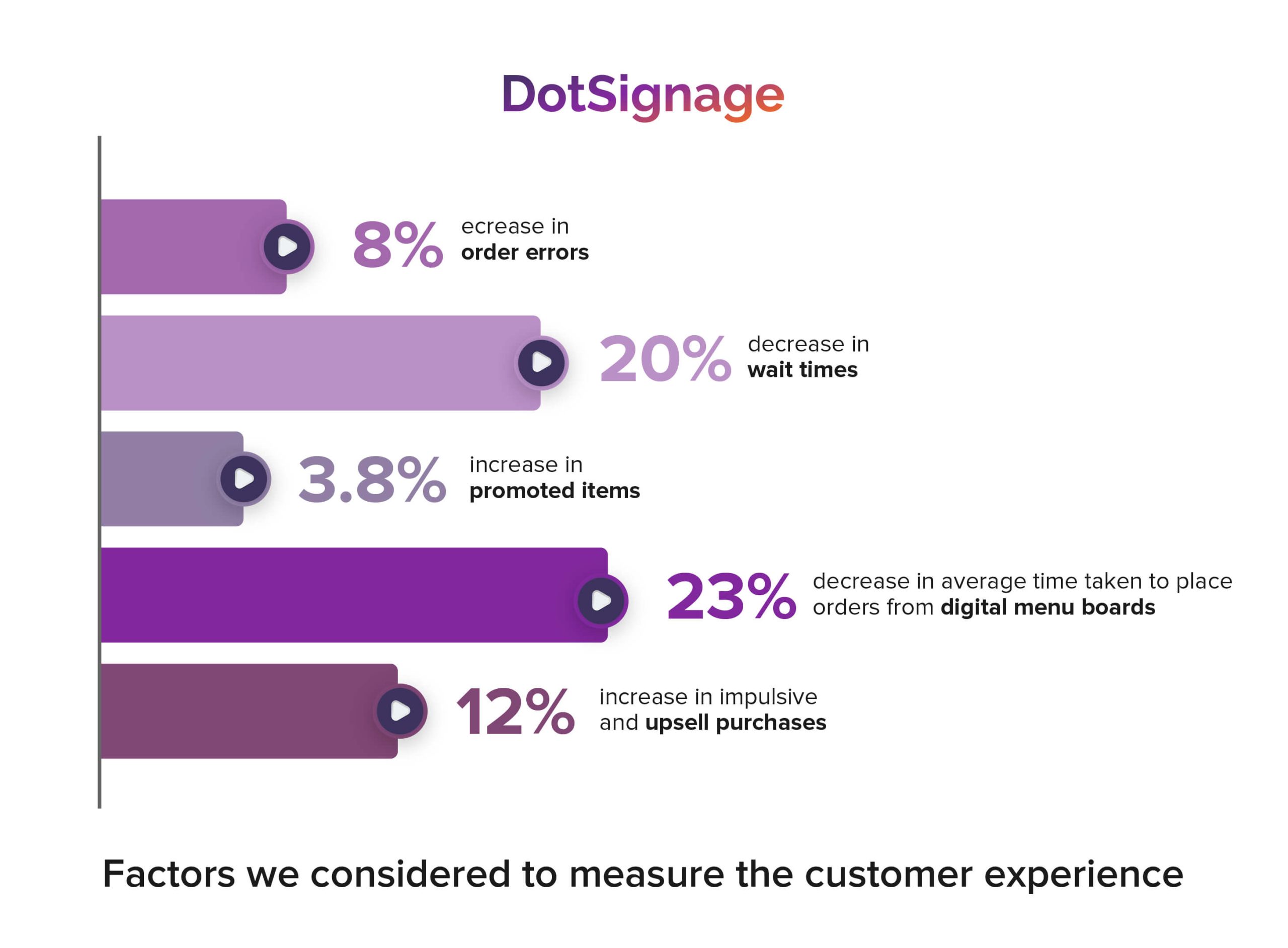
With the implementation of our digital menu boards, the restaurant saw a significant reduction of 20% in wait times or queues. Yes, you heard it right! No more waiting for your customers in long lines to place your order. Our digital menu display solution helped to streamline the ordering process, making it faster and more efficient.
But wait, there’s more! On average, the customers for our restaurant clients are taking 12 seconds (down by 23%) less to place their orders since the introduction of TV screen menu. That’s 12 more seconds you can spend chatting with your friends and family or simply enjoying your meal.
The promotions displayed with our digital menu board software have seen a 3.8% increase in orders for items promoted. This works great if you are looking to understand your customers’ tastes and preferences.
By designing different offers over a period and gauging the level of receptiveness, you can understand which promotion works best for you and use it to your advantage. There is no point blinding designing your promotions similar to your competitors.
With digital menu boards, you can experiment and learn what is best for you and your customer base.
Imagine yourself as a customer in the same position. With the right promotions designed for your main favorites, will you think twice before trying them out? What will eventually happen with this is that the order size for restaurants will increase, and the promotions will help them get more orders too.
We also reported that with the help of our digital menu board solution, there was an 8% reduction in order errors. We know how frustrating it can be to receive the wrong order, and we are happy to state that our restaurant clients have put menu board templates to good use to make sure their menus are readable and make it easy to place orders.
Restaurants also found that using menu board displays has led to a 12% increase in impulsive and upsell purchases.
Overall impact of digital menu boards for restaurants:
- Increased Sales (91% agree)
- Improved Customer Experience (88% agree)
- Operational efficiency (79% agree)
- Cost Savings (90% agree)
- Return on Investment (89% agree)
- Faster Service (83% agree)
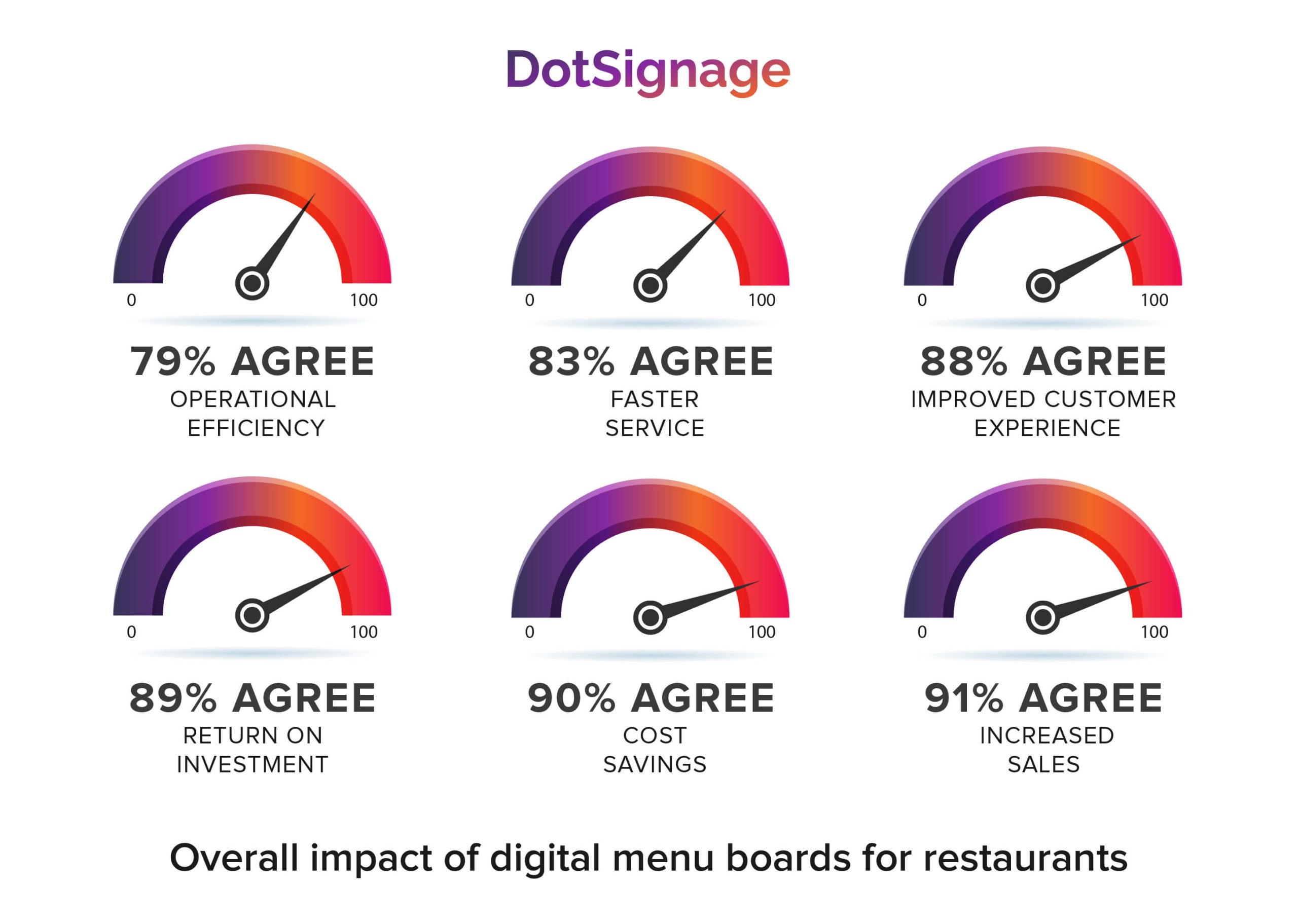
1) 91% of respondents agreed that digital menu boards resulted in increased sales. This can be attributed to the attractive and interactive nature of digital menu boards, which grabs attention especially if you have mouthwatering food videos being played on the screens.
They can help promote high-margin items or special promotions, which can lead to an increase in sales.
They completely replace the drawbacks of paper menus allowing you to experience with different content on your menu boards screens and understanding what works best with your target and loyal customers.
2) 95% of respondents agreed that
Unlike the case of paper menus, your customers need not wait to get access to your menu when TV screens are being used to display menus. We also offer the ability of adding QR codes to the menus.
So, customers can scan it and get access to the entire menu from the comfort of their mobile phones. It
really gets much easier to decide what to order while you are waiting in the queue.
They also provide customers with more control over their orders, allowing them to customize their meals with ease.
3) 79% of respondents agreed that digital TV screen menu result in operational efficiency. They allow restaurants to make quick and easy updates to their menu, saving time and effort compared to traditional paper-based menus.
The staff can also go on to make changes to the menu from the dashboard or they can plan their weekly content with day-wise menus if needed as well.
The menus make it easier to present all the information about each of your menu items easily, which makes it easier for customers to place orders. So, the staff can now focus on taking the orders instead of explaining the menu items to their customers.
4) 90% of respondents agreed that digital menu boards lead to cost savings. They eliminate the need for printing and distributing paper-based menus, which can result in significant cost savings over time.
They can reduce food waste by allowing restaurants to update their menu in real-time, reducing the likelihood of overstocking or understocking ingredients.
5) 89% of respondents agreed that restaurant TV menu display provide a positive return on investment. The initial cost of installing digital signage can be high, but the long-term benefits, such as increased sales, improved customer experience, and cost savings, can outweigh the initial investment.
6) 83% of respondents agreed that menu display result in faster service. They allow customers to browse and order quickly, reducing waiting times and increasing customer satisfaction. Restaurant TV screen menu can improve order accuracy, leading to fewer errors and faster service.
So, what do we conclude?
Although we surveyed only 75 customers, the results clearly demonstrate the positive impact of digital menu boards on restaurants.
Going beyond numbers, digital menu boards are a must for any QSR, fast casual or other dining spaces that could use them to drive better orders.
With limited time on hand and the pressure to serve the best to customers, restaurants are in no position to risk customer service due to their reluctance or doubts about going for menu boards.
That said, you don’t need to spend a large chunk of money to use them. Any TV can be converted into a digital menu board.
Refer this blog to learn more: How to set up DotSignage with Amazon Fire TV Stick, Android TV or Android Box
If you’re searching for software that enables you to manage your digital menu boards seamlessly, create customized menu templates or choose from our extensive library of over 750+ in-built menu board templates, take a look at our services.
You can sign up for our 7-day free trial or send us your inquiries at info@dotsignage.com